Posts

Technology Addiction Claptrap
Image
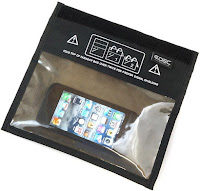
We recently ran a little study to see what happens when you prevent a small group of students from using their smartphone for 24 hours. Participants were instructed to place their smartphone in a secure evidence bag. So what happened? Well not much really, they missed their smartphone.  As part of this study, we also asked participants to complete the Smartphone 'Addiction' Inventory (SPAI). Interestingly, a few participants who dropped out later in the study had fractionally higher SPAI scores. This may indicate that smartphone ‘addicts’ were unable to fully participate in the study and so discontinued, thus affecting our findings. However, this is unlikely given that smartphone addiction scales  do not align favourably with objective behaviour . It is worth noting that while this small number of participants were slightly more anxious at time 1 they were also on average, a bit happier. It's increasingly difficult to know exactly what these 'addiction...

Replicating habitual smartphone behaviours: 2009-2018

Image
We recently collected more smartphone usage data to test if pen and paper scales could predict behaviour ( they didn't ). However, in the process we managed to replicate some of our previous results from 2015. Specifically, the average number of smartphone pick-ups per day remains remarkably similar across both samples despite using different software and smartphone operating systems to quantify these behaviours. These results therefore cast some doubt over the idea that Android and iPhone users differ in their usage behaviours ( we previously observed some demographic and personality differences between these two groups ). Mean number of pick-ups from 2015 sample: 84.68 ( SD =55.23) . Mean number of pick-ups from 2018 sample: 85.44 ( SD =53.34) . It's worth remembering that our results in 2015 were already comparable with data collected by others in 2009 ! The idea that people are using their phones more doesn't really hold up to scrutiny.  ...

The Role of a Journal Editor

Having navigated the academic publishing system as an author, reviewer and occasional editor, I can confirm that there are inconsistencies at almost every turn * . From the variable quality of reviews to the procedures in place during article or chapter production, even within the same journal, authors and reviewers can have very different experiences. Previously, I was led to believe that the role of an editor was clear and consistent. Editors read manuscripts, find reviewers, and make key decisions based on reviews and their own expertise. In addition, editors can help guide authors towards what they feel are the most important points that should be addressed following review. This is particularly important when it comes to clarifying the direction of a paper when reviewers express conflicting views. However, a number of editors and associate editors, who are sometimes paid by journals, don't always act in a way that is helpful or fair to authors and reviewers. In many instan...

Why measuring screen time is important

Image
Sometimes there is a disconnection between scientific methods used to investigate a given phenomena and the language used to describe subsequent results.  When it comes to understanding the impact of technology use on health, wellbeing or anything else for that matter, the gulf is vast.  See here for a related discussion.  This has become even more important as the   UK Government is currently conducting an enquiry around the impact of screen time and social media on young people. The outcome could lead to new guidelines for the public especially parents with young children.   Many academics have already submitted evidence that argues for a cautious approach when developing any new guidance or regulation because the evidence base suggesting any effects (good or bad) remains relatively weak.  However, other voices have concluded that social media and screen time is a public health issue that needs to be addressed as a matter of urgency.  ...

Altmetric Page Finder HTML

Image
Altmetric collect and collate all  disparate information to provide a single visually engaging and informative view of the online activity surrounding scholarly content. This can be useful for both individual researchers and institutions who want to understand where work might be having an impact beyond citations by other academics. However, I have spoken to a few folk recently about accessing their own (and others) Altmetric scores when they don't have access to a specific link or an Altmetric paper number. The easiest way to do this is via a short snippet of HTML that includes the DOI number of any paper. Here is the HTML (DOI number is in bold): Which generates the following badge and link: This also allows for some interesting customisation options by modifying variables (e.g.  type and/or mentions). Altmetric actually provides a longer winded version of this tutorial on their own website, which can generate the code from a few drop down menus!

Apple Watch Series 2: A short review

Image
UPDATE 4/09/2018 - The hardware failed after 18 months. Interestingly enough, a colleagues watch also failed around the same time. Unfortunately, from a build quality perspective, and like many other consumer wearables, they are simply not built to last. And so ends my Apple Watch journey. ORIGINAL REVIEW I've owned an Apple Watch Series 2 for about 8 months now and given that I have tested and written about a fair few activity trackers in the last 18-24 months, it seemed appropriate to share a few thoughts. Apple Watch Series 2 - I didn't own the Series 1 so can't really compare the two from a personal perspective. However, the Series 2 is both waterproof and has improved battery life over the first version. Health In terms of fitness trackers, it is up there with some of the best when it comes to tracking running, cycling and swimming. When running the watch reports total time, average pace, heart rate and distance travelled. Apple's own acti...

Experience sampling within psychology

Image
Experience sampling allows for “real time,” in situ assessments of behaviour temporally close to the moment of enactment.  Early attempts involved participants carrying specific devices, which were expensive and bulky, but the rise of smartphones means that this method can be deployed across a variety of research designs. For example, text messages can easily be sent using a specific account or a third-party automated system (e.g. here ).    More complex designs can also combine real-world data from smartphone sensors. This might include location via GPS, or health related data in the form of movement or heart rate .  Experience sampling can also can help reduce the temptation to provide social desirable responses. Most smartphones come equipped with a camera, and mobile phone apps allow participants to upload photos as supplemental data. The changing face of experience sampling - from software running on expensive Personal Digital Assistants to smartpho...