Posts

Showing posts with the label Social psychology

Technology Addiction Claptrap
Image
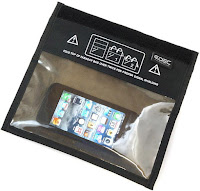
We recently ran a little study to see what happens when you prevent a small group of students from using their smartphone for 24 hours. Participants were instructed to place their smartphone in a secure evidence bag. So what happened? Well not much really, they missed their smartphone.  As part of this study, we also asked participants to complete the Smartphone 'Addiction' Inventory (SPAI). Interestingly, a few participants who dropped out later in the study had fractionally higher SPAI scores. This may indicate that smartphone ‘addicts’ were unable to fully participate in the study and so discontinued, thus affecting our findings. However, this is unlikely given that smartphone addiction scales  do not align favourably with objective behaviour . It is worth noting that while this small number of participants were slightly more anxious at time 1 they were also on average, a bit happier. It's increasingly difficult to know exactly what these 'addiction...

Current Research - Undergraduate Supervision

Image
This year, I'm fortunate enough to be supervising a number of interesting projects. A few of these can be completed entirely online. I'm sure my students would be grateful if you have a few spare minutes to take part. Finally, if you chose to leave your email address at the end, we can keep you notified of the results! [CLOSED] Perceptions towards everyday temporal experiences Crime Anxiety Where's the worst place to position a tattoo? Attitudes towards video games Exploring attitudes towards older adults The Social Network

Working 9-5, what a way to measure social behaviour outside the lab: Introducing Sociometric Sensors.

Image
At The University of Lincoln , we have recently taken delivery of several  Sociometric sensors !! Until very recently it was impossible to record social signalling in natural settings with a high level of precision over time. While observers have been employed in the past, their observations are inherently subjective, expensive and often inaccurate. However, advances in electronic measurement sensors, reduction in battery sizes and developments in computational data analysis have facilitated the measurement of what was previously deemed invisible. As a result, there is a growing body of evidence suggesting that social signalling plays a significant role in everyday persuasion and decision making, with applications extending to analysis and redesign of organisational networks. A Sociometric sensor (Figure 1) is a small electronic device worn around the neck. It measures a variety of individual and interpersonal behaviours during a social interaction by way of four sensors...